第21篇:链路聚合 Eth-Trunk:手工模式与 LACP 模式
关键词:链路聚合、Eth-Trunk、LACP、手工负载分担、链路备份、802.3ad
一、引言
在第20篇中,我们看到某企业网因双链路形成环路导致全网瘫痪,最终靠 STP 才恢复。但 STP 阻塞冗余链路后会产生一个新问题:被 STP 阻塞的链路完全不承载流量,造成带宽浪费。
为彻底解决带宽浪费问题,网络工程师通常会把多条物理链路捆绑成一条逻辑链路——这就是链路聚合(Link Aggregation)。链路聚合让多条链路同时转发数据,既成倍提升带宽,也提供链路级冗余。更重要的是,对 STP 而言 Eth-Trunk 只是一条逻辑链路,不会形成第20篇中那种因双链路产生的根桥抢占问题。
华为设备使用 Eth-Trunk 实现链路聚合,支持手工负载分担和 LACP(Link Aggregation Control Protocol)两种模式。本文将详细讲解链路聚合的工作原理、两种模式的配置方式及适用场景。
二、核心概念
2.1 链路聚合的基本术语
| 术语 | 说明 |
|---|---|
| Eth-Trunk | 华为设备链路聚合的逻辑接口 |
| 成员接口(Member Interface) | 加入聚合组的物理接口 |
| 活跃成员接口 | 当前实际参与转发的成员接口 |
| 非活跃成员接口 | 备份状态,活跃接口故障时接替 |
| 最大成员数 | 取决于设备型号,通常为 8/16/64 个 |
2.2 两种模式对比
| 维度 | 手工负载分担模式 | LACP 模式 |
|---|---|---|
| 协议协商 | 无 | LACP(802.3ad) |
| 链路状态检测 | 仅依赖 UP/DOWN | LACP 报文协议 |
| 对端设备要求 | 不强制(手工模式两端需一致) | 支持(多设备聚合) |
| 配置复杂度 | 低 | 中 |
| 自动协商 | 对端必须手工模式 | 对端也支持 LACP |
| 推荐场景 | 简单场景、对端不支持 LACP | 双设备聚合(推荐) |
2.3 链路聚合的好处
| 好处 | 说明 |
|---|---|
| 增加带宽 | 多条链路叠加(2 条 1G = 2 Gbps) |
| 负载分担 | 数据流分散到不同链路,避免单条链路过载 |
| 链路备份 | 某条链路故障时,自动迁移到其他链路 |
| 对 STP 友好 | 聚合组对 STP 只是一条逻辑链路,不会形成环路 |
三、技术细节
3.1 手工负载分担模式
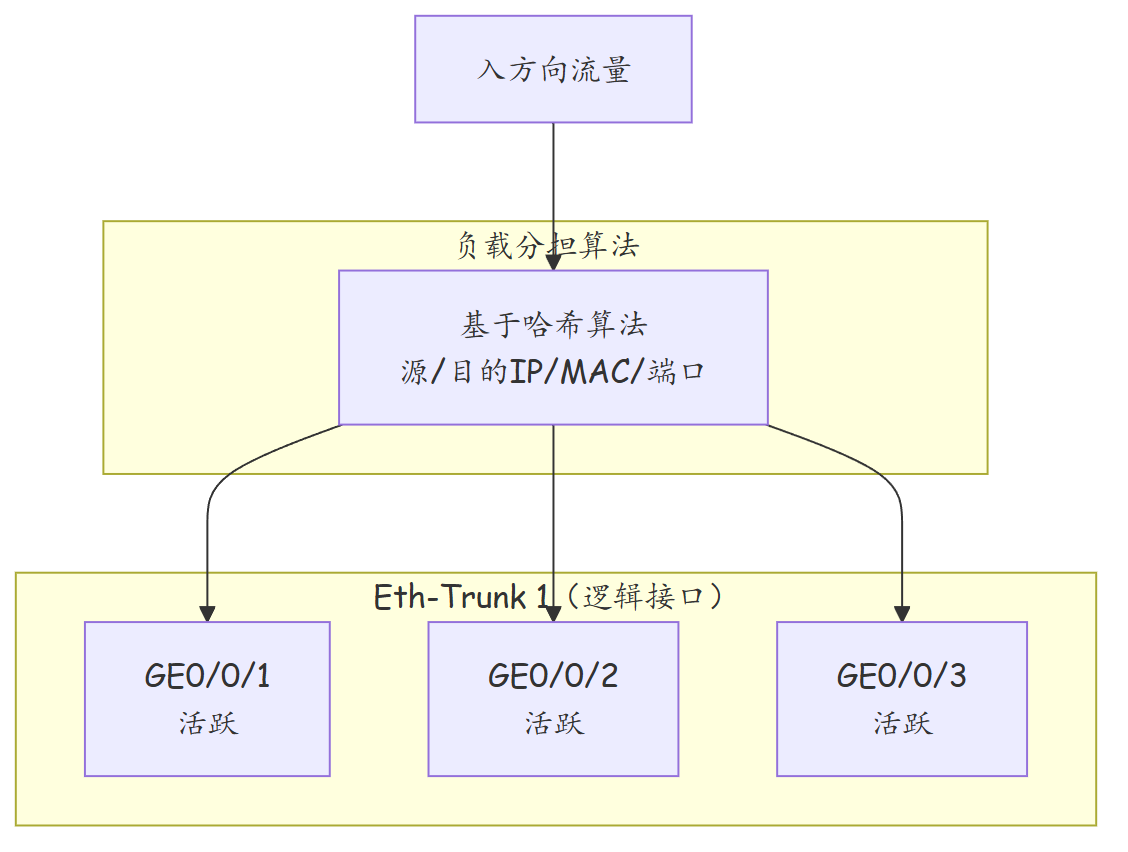
工作原理: 1. 多个成员接口加入同一个 Eth-Trunk 2. 所有成员接口同时处于活跃状态 3. 根据数据散列算法分配流量到不同成员接口 4. 某成员接口故障时,自动迁移到其他成员接口
3.2 LACP 模式
LACP(802.3ad)通过 LACPDU(LACP 数据单元)在两台设备之间协商聚合链路。
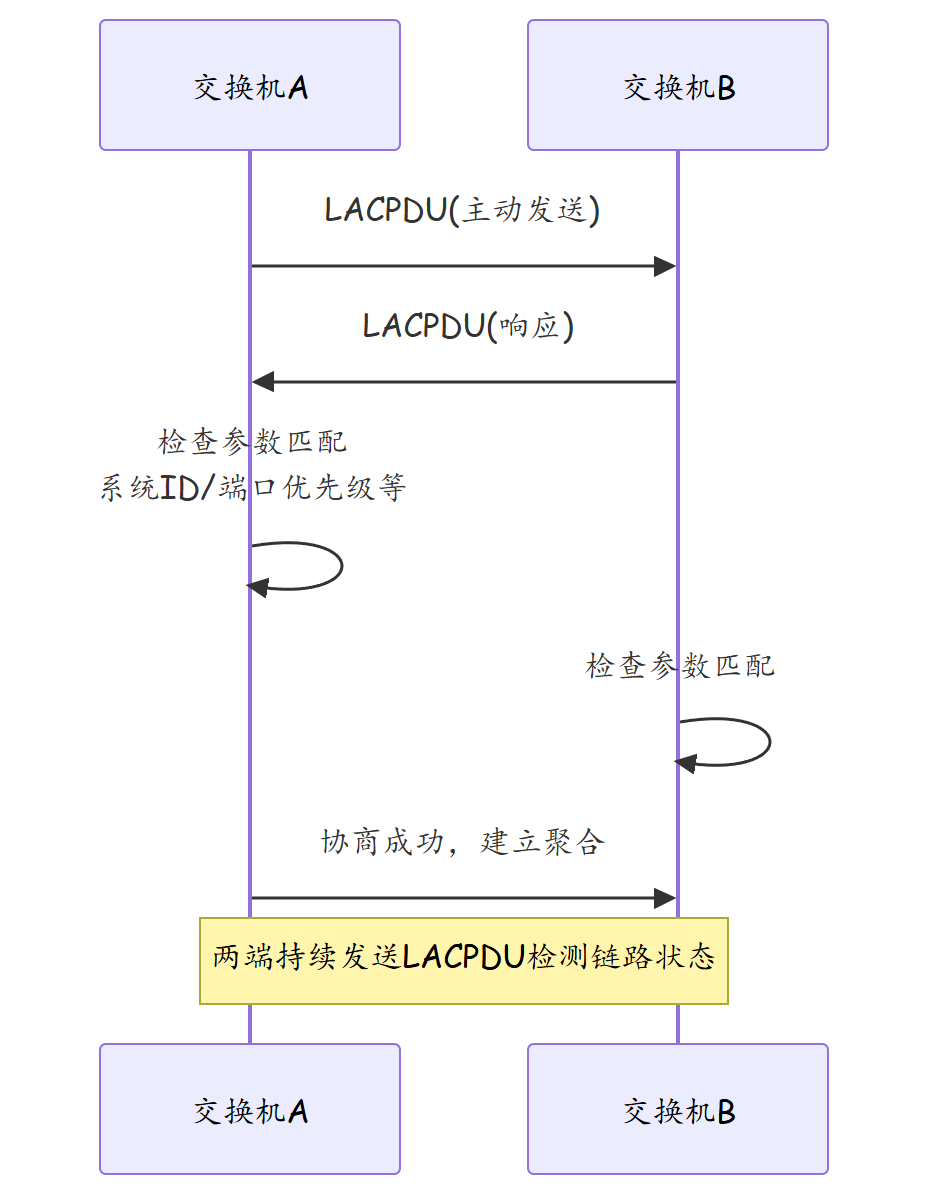
LACP 关键概念:
| 概念 | 说明 | 默认值 |
|---|---|---|
| 系统优先级 | 影响对端选择聚合链路 | 32768 |
| 系统 ID | 系统优先级 + MAC 地址 | 自动生成 |
| 端口优先级 | 影响本端选举哪些端口为活跃 | 32768 |
| 端口号 | 端口优先级 + 端口编号 | 自动生成 |
| LACP 模式 | Active(主动发送)/ Passive(被动响应) | Active |
3.3 LACP 活跃成员选择
LACP 根据两端协商结果选择活跃成员接口:
| 选择顺序 | 比较项 | 规则 |
|---|---|---|
| 1 | 对端端口优先级 | 数值小者优先 |
| 2 | 对端端口号 | 数值小者优先 |
| 3 | 本端端口优先级 | 数值小者优先 |
| 4 | 本端端口号 | 数值小者优先 |
可通过
max active-linknumber X设置最大活跃成员数量,超出部分作为备份。
3.4 负载分担算法
| 算法 | 命令 | 说明 |
|---|---|---|
| 源 IP 散列 | load-balance src-ip |
按源 IP 哈希 |
| 目的 IP 散列 | load-balance dst-ip |
按目的 IP 哈希 |
| 源+目的 IP 散列 | load-balance src-dst-ip |
综合哈希(默认) |
| 源+目的 MAC 散列 | load-balance src-dst-mac |
按 MAC 哈希 |
| 二层散列 | load-balance packet-type |
按报文类型(含 MAC + VLAN) |
注意:华为 VRP 中标准的负载分担命令格式是
load-balance { src-ip | dst-ip | src-dst-ip | src-mac | dst-mac | src-dst-mac | packet-type },不是load-sharing。
四、实战配置/案例分析
4.1 案例一:手工负载分担模式配置
需求:两台交换机之间使用两条 GE 链路聚合。
# 交换机 A
[SW-A] interface Eth-Trunk 1
[SW-A-Eth-Trunk1] trunkport GigabitEthernet 0/0/1
[SW-A-Eth-Trunk1] trunkport GigabitEthernet 0/0/2
[SW-A-Eth-Trunk1] mode manual load-balance  // 缺省情况下,Eth-Trunk的工作模式为手工模式。
[SW-A-Eth-Trunk1] quit

# 交换机 B(对端也手工模式)
[SW-B] interface Eth-Trunk 1
[SW-B-Eth-Trunk1] trunkport GigabitEthernet 0/0/1
[SW-B-Eth-Trunk1] trunkport GigabitEthernet 0/0/2
[SW-B-Eth-Trunk1] mode manual load-balance
[SW-B-Eth-Trunk1] quit

# 验证,全部为活跃端口
<SW-A> display eth-trunk 1
Eth-Trunk1's state information is:
WorkingMode: NORMAL         Hash arithmetic: According to SIP-XOR-DIP
Least Active-linknumber: 1  Max Bandwidth-affected-linknumber: 8
Operate status: up          Number Of Up Port In Trunk: 2
--------------------------------------------------------------------------------
PortName                                 Status      Weight
GigabitEthernet0/0/1                     Up          1
GigabitEthernet0/0/2                     Up          1
4.2 案例二:LACP 模式配置(推荐)
# 交换机 A
[SW-A] interface Eth-Trunk 1
[SW-A-Eth-Trunk1] mode lacp-static
[SW-A-Eth-Trunk1] trunkport GigabitEthernet 0/0/1
[SW-A-Eth-Trunk1] trunkport GigabitEthernet 0/0/2
[SW-A-Eth-Trunk1] trunkport GigabitEthernet 0/0/3

# 设置最大活跃成员为 2(1 条备份)
[SW-A-Eth-Trunk1] max active-linknumber 2

# (可选)配置负载分担算法
[SW-A-Eth-Trunk1] load-balance src-dst-ip
[SW-A-Eth-Trunk1] quit

# 交换机 B(对端)
[SW-B] interface Eth-Trunk 1
[SW-B-Eth-Trunk1] mode lacp-static
[SW-B-Eth-Trunk1] trunkport GigabitEthernet 0/0/1
[SW-B-Eth-Trunk1] trunkport GigabitEthernet 0/0/2
[SW-B-Eth-Trunk1] trunkport GigabitEthernet 0/0/3
[SW-B-Eth-Trunk1] link-aggregation max-active-link 2
[SW-B-Eth-Trunk1] quit

# 验证,2个活跃端口状态为Selected,1个备份端口状态为Unselect
<SW-A> display eth-trunk 1
Eth-Trunk1's state information is:
Local:
LAG ID: 1                  WorkingMode: LACP
Preempt Delay Time: 10      Hash arithmetic: According to SIP-XOR-DIP
System Priority: 120        System ID: 00e0-fcd4-04c3
Least Active-linknumber: 1  Max Active-linknumber: 2
Operate status: up          Number Of Up Port In Trunk: 2
--------------------------------------------------------------------------------
ActorPortName                     Status   PortType     PortPri PortNo PortKey PortState Weight
GigabitEthernet0/0/1              Selected 1GE          32768   264    2609    10111100  1
GigabitEthernet0/0/2              Selected 1GE          32768   264    2609    10111100  1
GigabitEthernet0/0/3              Unselect 1GE          32768   264    2609    10100000  1

Partner:
--------------------------------------------------------------------------------
ActorPortName                     SysPri    SystemID  PortPri PortNo  PortKey   PortState
GigabitEthernet0/0/1              32768  00e0-fc6e-bb11  32768  262   2609      10111100
GigabitEthernet0/0/2              32768  00e0-fc6e-bb11  32768  263   2609      10111100
GigabitEthernet0/0/3              32768  00e0-fc6e-bb11  32768  264   2609      10110000
4.3 案例三:Eth-Trunk 配置不一致故障
故障现象:配置 Eth-Trunk 后,端口状态为 Down。
排查:
<SW-A> display eth-trunk 1
 Eth-Trunk1 is down
 Error: LACP negotiation failed

# 查看对端配置
<SW-B> display current-configuration interface Eth-Trunk 1
 mode manual load-balance    ← 对端是手工模式

# 结论:本端 LACP 模式与对端手工模式不匹配
# 修复:将两端配置为同一模式
[SW-B] interface Eth-Trunk 1
[SW-B-Eth-Trunk1] mode lacp-static
[SW-B-Eth-Trunk1] quit
其他常见不一致项: | 不一致项 | 症状 | |---------|------| | 模式不一致 | LACP 协议失败 | | VLAN 配置不一致 | 跨 VLAN 通信失败 | | 端口速率/双工不一致 | 端口无法加入聚合组 | | STP 配置不一致 | STP 端口角色异常 |
五、总结
| 模式 | 适用场景 | 配置复杂度 | 可靠性 |
|---|---|---|---|
| 手工负载分担 | 对端不支持 LACP、单设备聚合 | 低 | 中(无协议检测) |
| LACP 模式 | 双设备聚合、对端支持 LACP | 中 | 高(协议协商检测) |
| 配置检查清单 | 命令 |
|---|---|
| Eth-Trunk 状态 | display eth-trunk X |
| 成员接口列表 | display eth-trunk X |
| 活跃/非活跃成员 | display eth-trunk X |
| LACP 状态 | display link-aggregation verbose |
| 模式一致性 | 对比两端配置 |
思考
- 如果 Eth-Trunk 配置了 4 个成员链路,最大活跃成员数设置为 2,当 2 条活跃链路全部故障时,备份链路会自动切换吗?
- 链路聚合后,STP 把 Eth-Trunk 当作一条链路处理,那么对 STP 而言会少了一个阻塞点,这有什么影响?
- LACP Active 模式与 Passive 模式有什么区别?两端都是 Passive 模式能协商成功吗?
下篇预告:第22篇:LACP 协商过程及优先级机制